

Solid Wood Furniture vs Veneer: What to Know Before Buying Custom Furniture
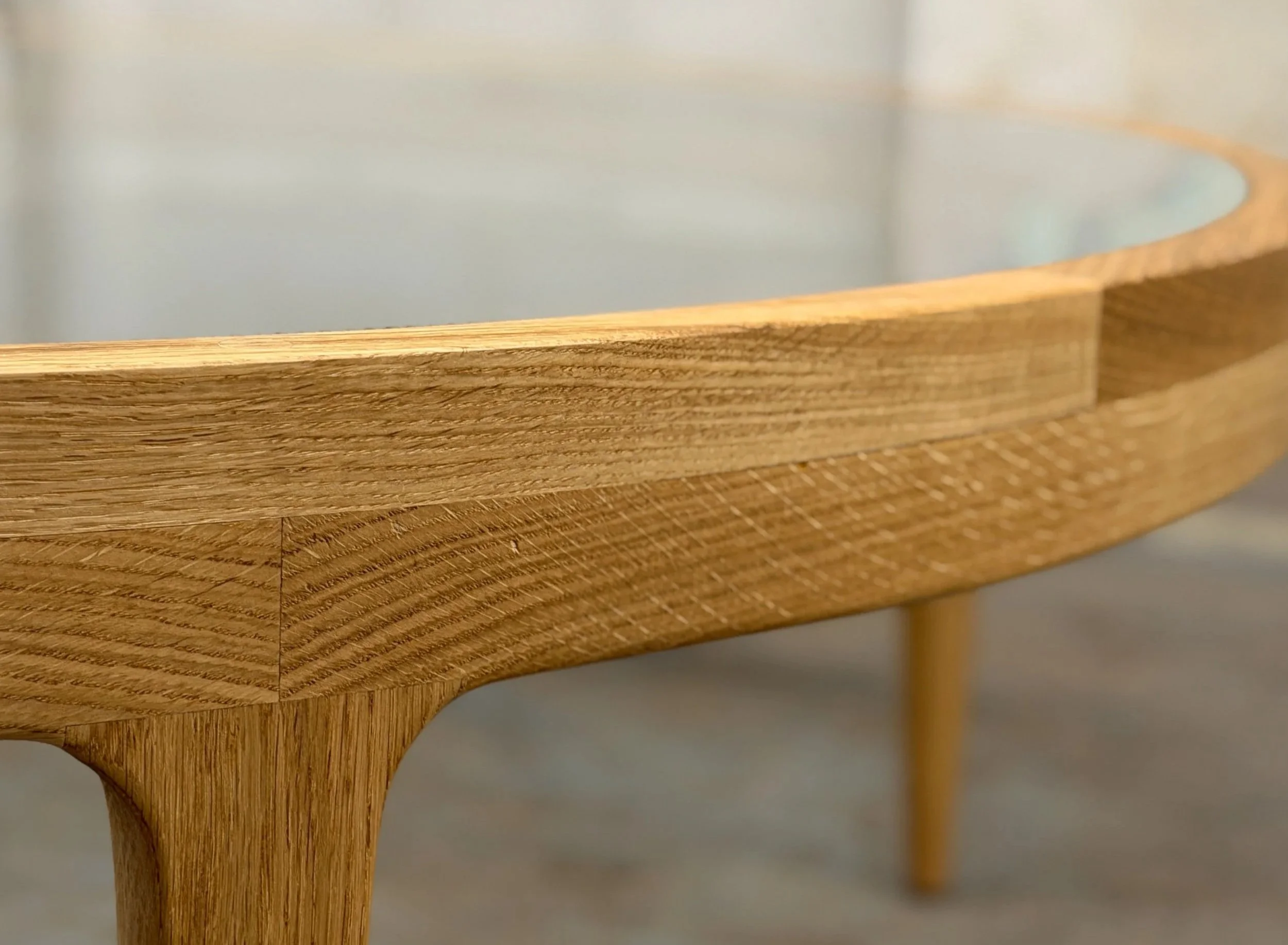
close up detail of joint between leg and frame on our Vista Round Coffee Table
When investing in custom furniture, one of the most important decisions is the material it’s made from. Terms like solid wood, veneer, and engineered wood are often used interchangeably, but they represent very different levels of quality, durability, and longevity. Understanding these differences will help you make an informed decision—especially when choosing furniture designed to last for generations.
What Is Solid Wood Furniture?
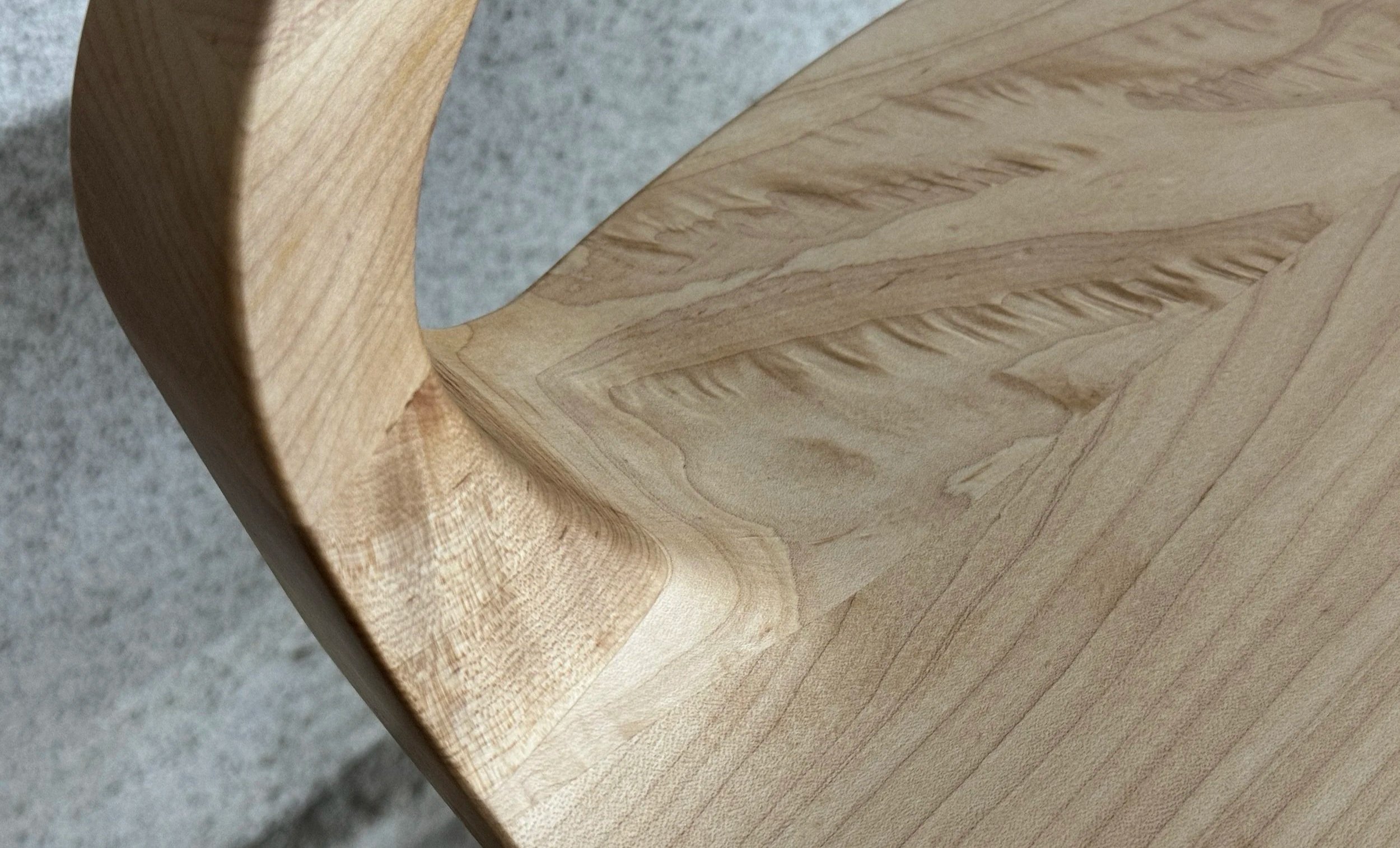
close up detail of sculpted backrest on our Apex stool seat.
Solid wood furniture is built entirely from natural hardwood lumber, such as walnut, oak, maple, or ash. Each component—legs, rails, aprons, and panels—is made from solid wood rather than composite materials. This is especially critical for chairs and stools, where long-term comfort and safety depend on structurally robust materials and precise joinery capable of withstanding daily use.
Key characteristics of solid wood furniture:
Continuous natural grain throughout the piece
Exceptional structural strength
Can be repaired, refinished, and maintained indefinitely
Develops character and patina over time
For custom furniture, solid wood allows precise control over dimensions, joinery, and proportions—making it ideal for made-to-order designs.
What Is Veneer Furniture?
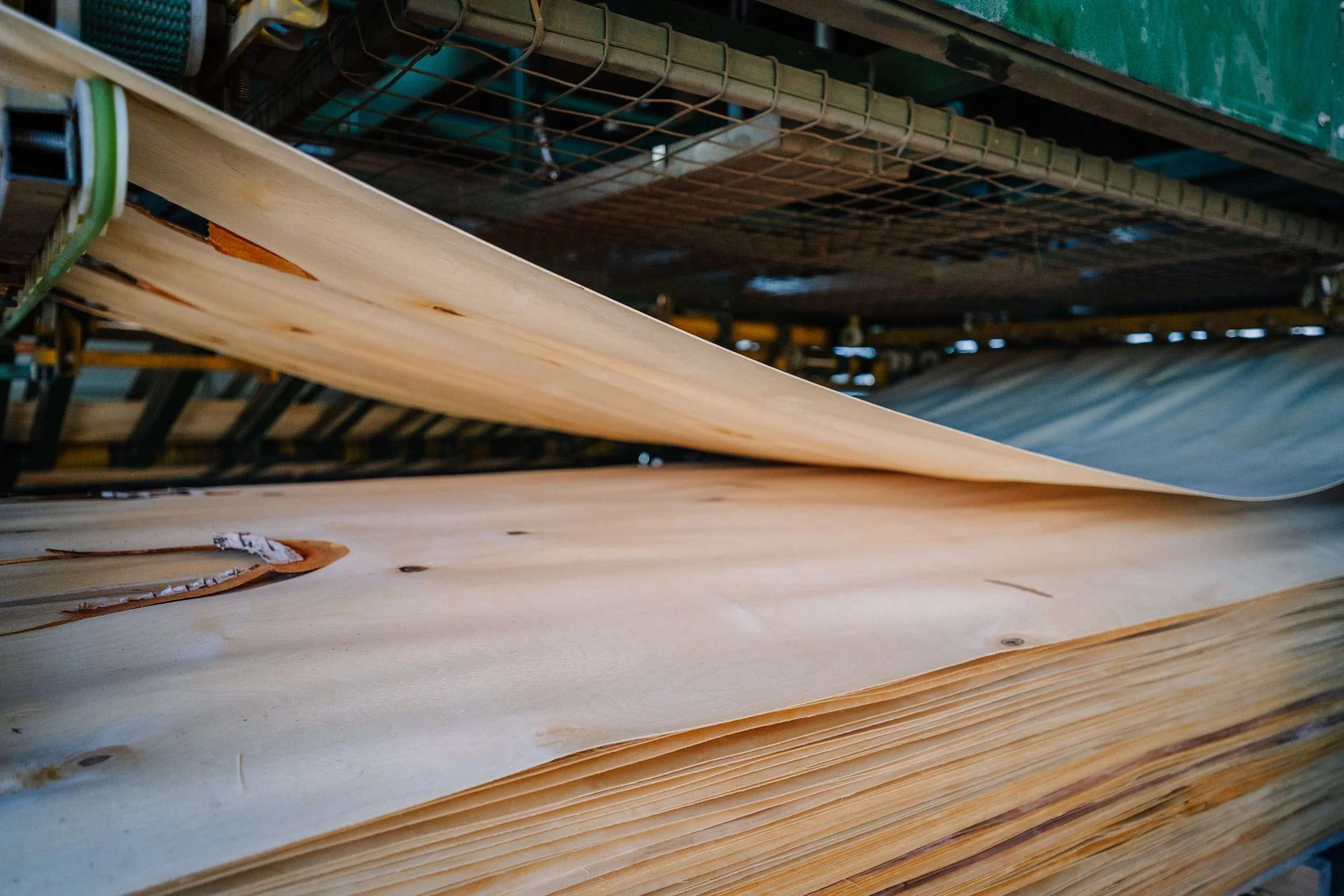
one sheet of 3/4” thick plywood requires over 32oz (1 quart) of glue
Veneer furniture uses a thin layer of real wood bonded to a substrate such as plywood, MDF, or particle board. While veneer can offer visual consistency and lower cost, its performance is tied to the material beneath the surface.
Common veneer substrates include:
Plywood (more stable, higher quality)
MDF or particle board (less durable, harder to repair)
Veneer furniture is often used in mass production, where uniform appearance and cost efficiency are prioritized over longevity.
Durability, Repairability, and Lifespan
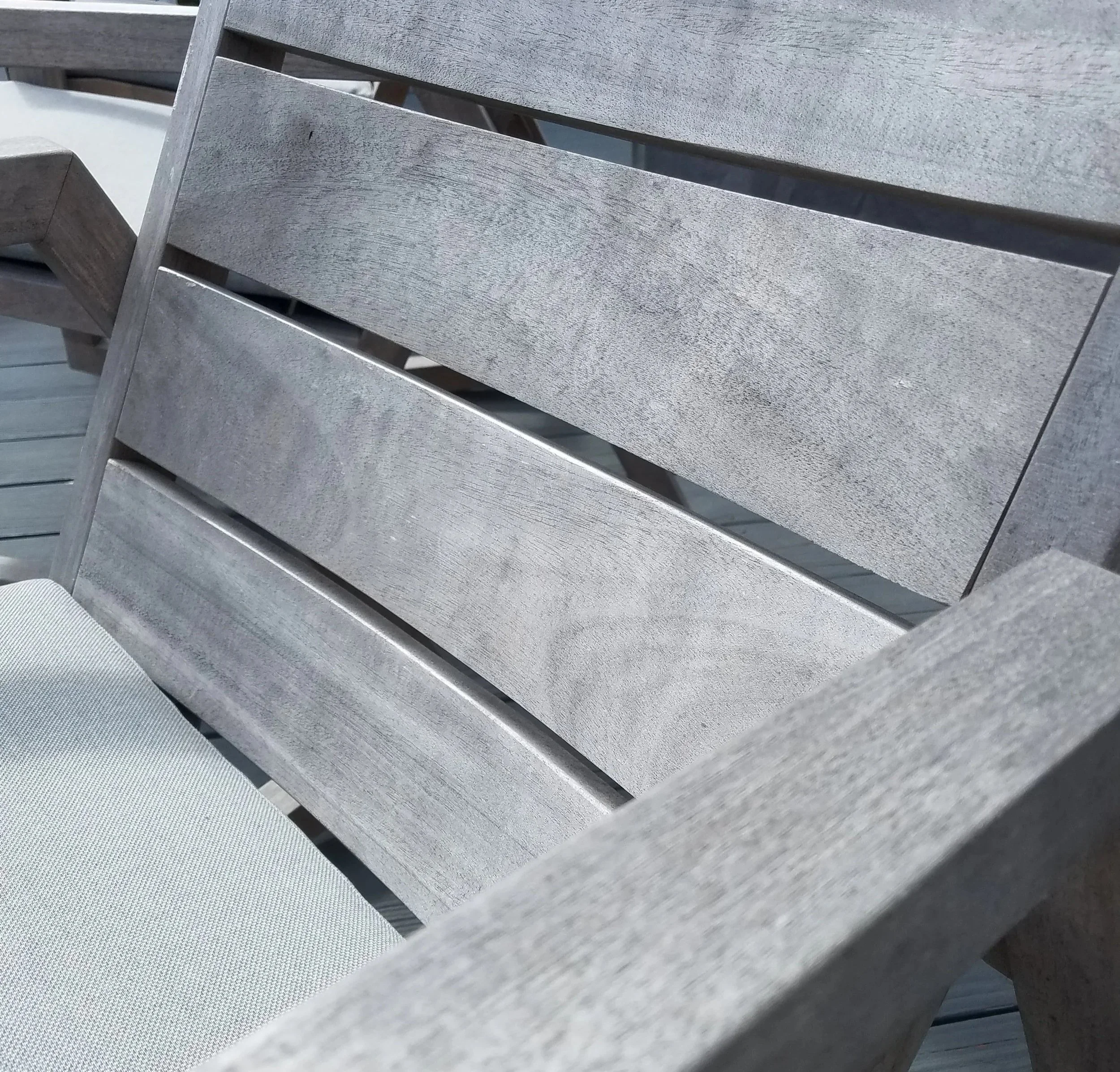
Closeup of our Onda Rocking Chair, photo taken after 5 years in full exposure to the elements in Atlanta, GA
One of the most important distinctions between solid wood and veneer furniture is how each performs over time.
Solid wood furniture:
Can be sanded and refinished multiple times
Minor damage can often be repaired invisibly
Mortise-and-tenon joinery provides long-term strength
Designed to last decades—or longer
Veneer furniture:
Limited ability to repair surface damage
Once veneer is worn through, replacement is often required
Structural repairs are more difficult due to composite cores
For high-use items like dining chairs, tables, and stools, solid wood offers significantly better long-term value.
Why Solid Wood Matters for Custom Furniture
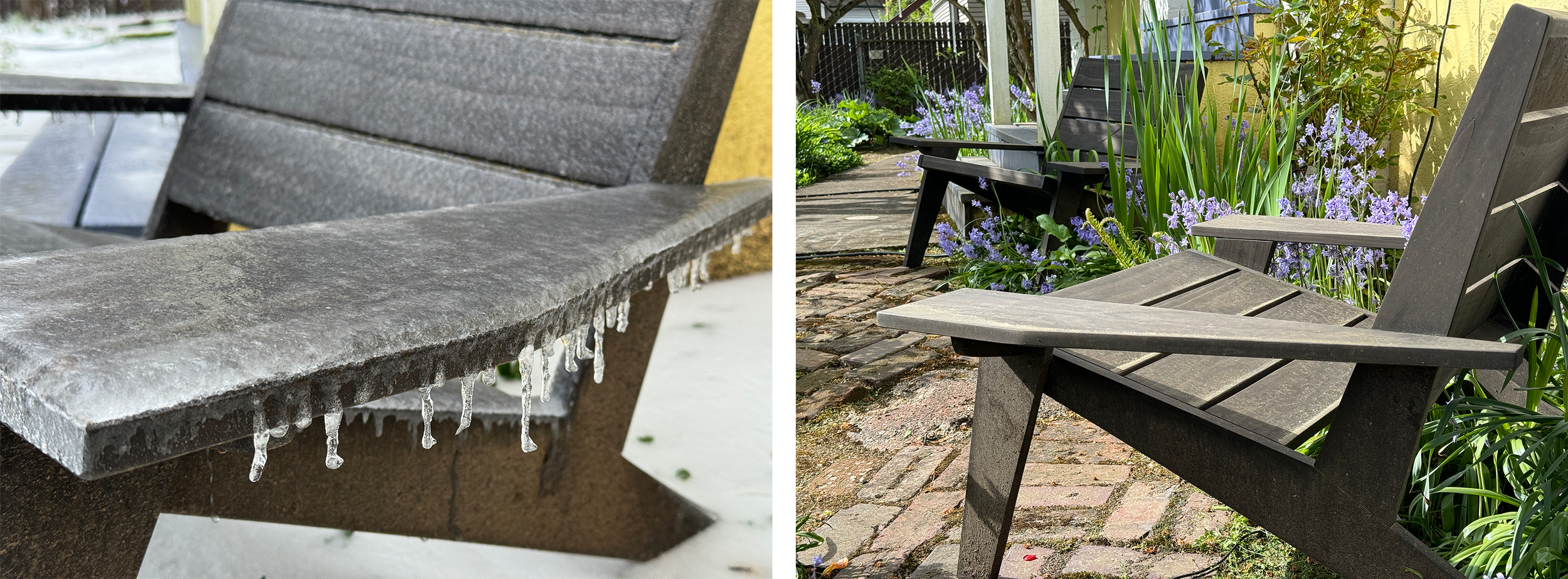
Designed for year-round outdoor use, our modern Adirondack chairs combine durable hardwood construction and thoughtful joinery to deliver 20+ years of lasting performance.
Custom furniture is built around specific needs—space constraints, seating height, proportions, and materials. Solid wood enables true customization without compromising strength or aesthetics.
With solid hardwood:
Dimensions can be tailored without structural shortcuts
Joinery replaces reliance on hardware
Finishes penetrate the wood rather than sitting on top
Pieces age gracefully instead of wearing out
This is why solid wood remains the standard for heirloom-quality furniture.
How to Tell the Difference When Shopping
If you’re evaluating furniture online or in person, a few indicators can help distinguish solid wood from veneer:
Ask what material is used for internal components, not just visible surfaces
Look for exposed end grain on legs and rails
Check whether the piece can be refinished
Review joinery details rather than relying on surface appearance
Transparency from the maker is a strong signal of quality.
Why We Build with 100% Solid Hardwood

Marco Bogazzi visiting mill in Nicaragua
At Marco Bogazzi, all furniture is designed and built using 100% solid hardwood—never veneers, laminates, MDF, or particle board. Each piece is made to order in Portland, Oregon, using traditional joinery and premium finishes that enhance durability while highlighting the natural beauty of the wood.
This approach allows us to create furniture that is visually refined, structurally sound, and built to withstand everyday use for decades. Above all, our goal is that each piece delivers a lasting sense of comfort, satisfaction, and enjoyment throughout a lifetime of use.
Choosing between solid wood and veneer furniture is ultimately a decision about longevity, repairability, value, and environmental responsibility. While veneer furniture may offer short-term savings, solid wood furniture supports long-term use, reduces waste through repair and refinishing, and provides enduring quality, adaptability, and a deeper connection to craftsmanship—especially when thoughtfully designed and made to order.